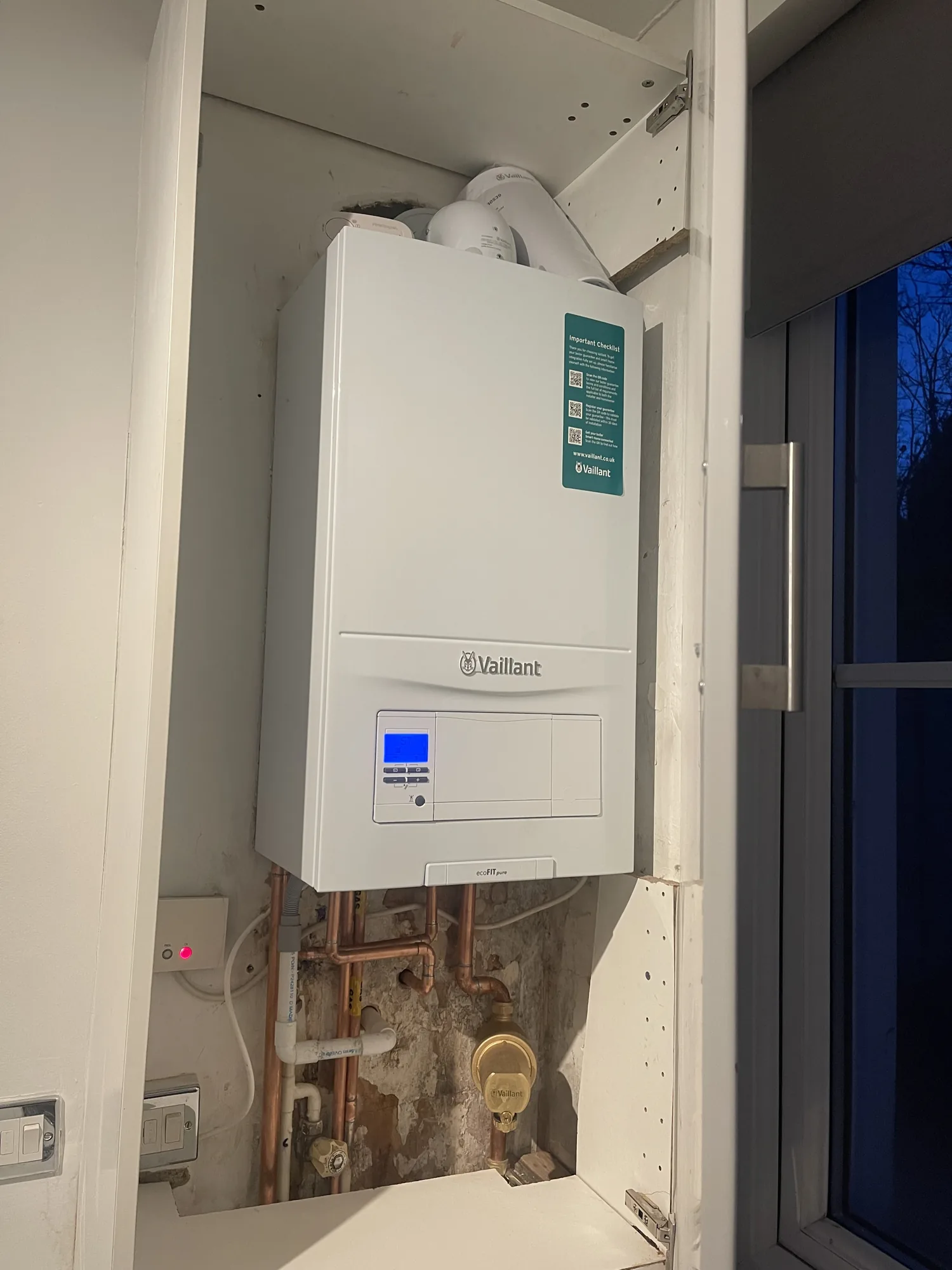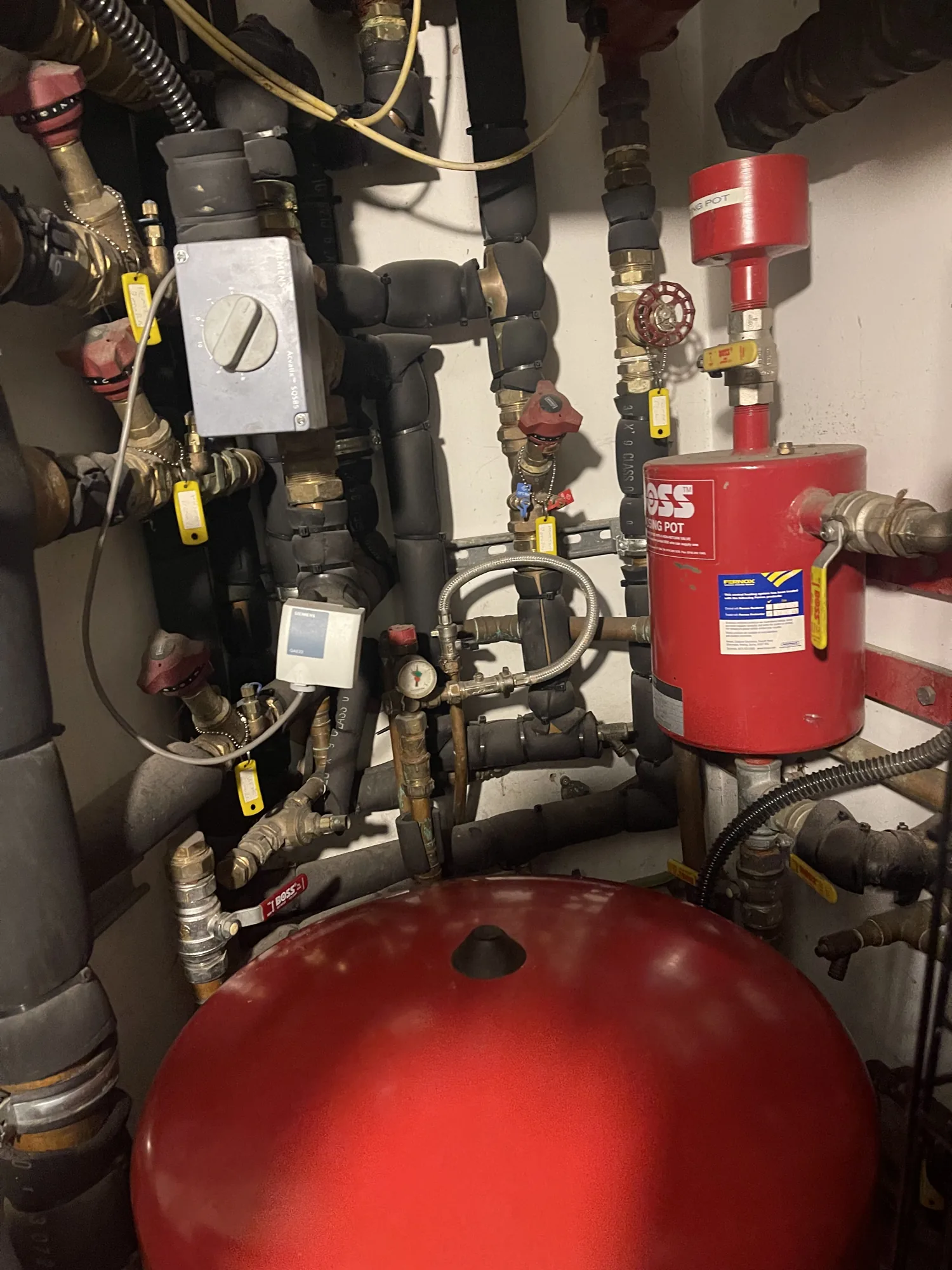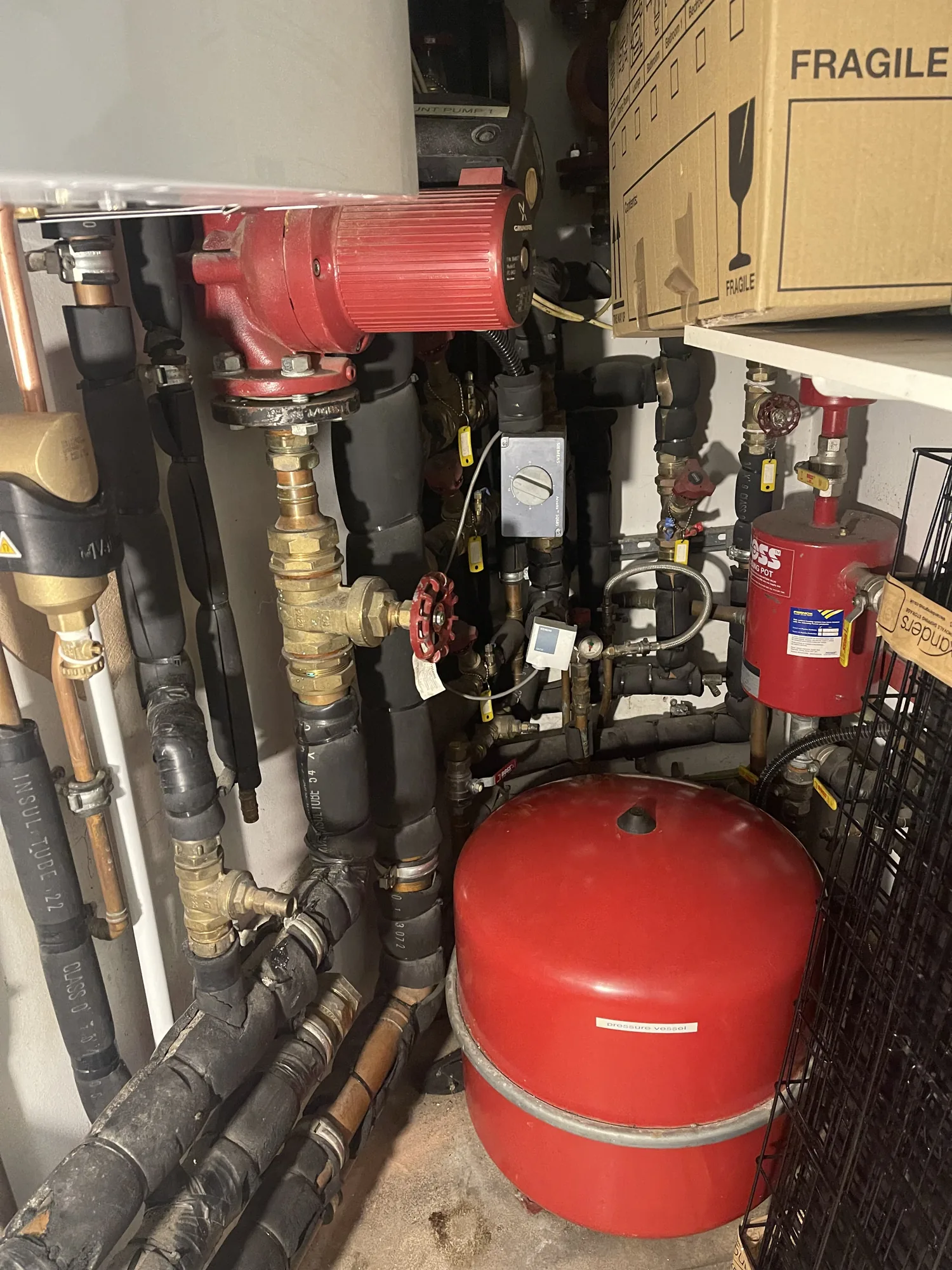
A power flush clears sludge and rust out of a central heating system so radiators heat evenly, the boiler works less hard and the whole system runs more efficiently. It is usually worth doing when radiators are cold at the bottom, rooms are slow to warm up, or before fitting a new boiler. A corrosion inhibitor is added afterwards to slow future build-up.
Over the years, the water that circulates around your central heating slowly picks up rust and debris from inside the radiators and pipework. That mix settles into a black, muddy sludge, and it collects in the places where water moves slowest: the bottom of radiators, the low points of the pipework, and inside the boiler itself. You feel the result as rooms that are slow to warm, radiators that are hot at the top and cold at the bottom, and a boiler that has to work harder than it should. A power flush is the job that clears all of that out and gets the system moving freely again.
What a Power Flush Actually Is
A power flush is a deep clean of your entire central heating system. An engineer connects a specialist pumping unit to the system and pushes water, along with a cleaning solution, through the radiators and pipework at high flow. That flow lifts the sludge and rust out of the low points where it has settled and carries it away, so the water running through your heating ends up clean rather than black.
It is different from simply bleeding a radiator or topping up the pressure. Those deal with air and symptoms. A power flush deals with the actual cause, the debris inside the system, which is why it often fixes problems that other quick fixes cannot.
Signs You Might Need a Power Flush
A few tell-tale signs point to sludge building up in a system.
- Radiators cold at the bottom: If a radiator is warm at the top but stays cold along the bottom, sludge has collected inside it and is stopping the water circulating properly. This is the classic sign.
- Slow to warm up: Rooms that take far longer to reach temperature than they used to, or never quite get there, suggest the system is clogged and heat is not moving around efficiently.
- Noisy boiler or pump: Banging, gurgling or a kettling sound from the boiler, or a noisy circulating pump, can be caused by debris restricting the flow.
- Dirty water when bleeding: If black or brown water comes out when you bleed a radiator, that is sludge, and there is likely a lot more of it in the system.
- Before fitting a new boiler: Many manufacturers expect the system to be cleaned before a new boiler goes on. Fitting a shiny new boiler onto a dirty system pushes old sludge straight into it, which can shorten its life and affect the warranty.
Radiators Cold at the Bottom?
Call Gas Direct Service on 07983 683930. Bashir will tell you honestly whether a power flush is the right fix or whether a simpler job will sort it, with free quotes across North and West London.
Call for a Free QuoteHow a Power Flush Is Done
A power flush is a methodical job rather than a quick one, and doing it properly is what makes the difference.
- Connect the unit: We connect the flushing machine to your system, usually at the pump or across the flow and return, so we can push cleaner through the whole system.
- Circulate the cleaner: A cleaning solution is circulated through the system to break down the sludge and loosen the corrosion clinging to the inside of the radiators and pipework.
- Flush radiator by radiator: We work through the radiators one at a time, reversing and agitating the flow so the loosened debris is lifted out rather than left sitting in the low points.
- Rinse until clear: The system is flushed through with fresh water until it runs clean, so what is left circulating is clean water rather than sludge.
- Add inhibitor: Finally we add a corrosion inhibitor to protect the system going forward.
How long it takes depends on the size of the system and how bad the sludge is, but most domestic power flushes are completed in a single visit.
The Benefits of a Power Flush
A good power flush pays you back in a few ways.
- Even, reliable heat: Radiators heat evenly from top to bottom, and the cold spots disappear.
- Faster warm-up: With the system flowing freely, rooms reach temperature more quickly.
- Lower running costs: A clean system lets the boiler work less hard to heat your home, which is easier on your energy bills.
- Longer life for the boiler and pump: Clearing the debris takes the strain off the boiler and pump, and protects the new boiler if you are about to fit one.
Why the Inhibitor Matters
Clearing out the sludge is only half the job. The reason the sludge formed in the first place is corrosion inside the system, and that process will simply start again unless something stops it. That is what a corrosion inhibitor does. It is a chemical we add to the system water once it is running clean, and it protects the metal inside the radiators and pipework so sludge and rust are much slower to build back up.
Skipping the inhibitor is a false economy, because the system will start silting up again far sooner. It is also worth topping the inhibitor up over time, and an annual boiler service is a good moment to check the level is still doing its job. A power flush plus a healthy dose of inhibitor is what keeps a system running well for years, not months.
Frequently Asked Questions
The clearest signs are radiators that are cold at the bottom, rooms that are slow to warm up, a noisy boiler or pump, and black water when you bleed a radiator. A power flush is not always the answer, though, so we will check the system first and tell you honestly whether it is worth doing or whether a simpler fix such as bleeding and balancing will sort it.
Most domestic power flushes are completed in a single visit. The exact time depends on the number of radiators and how much sludge has built up. A larger system, or one that is heavily silted, will take longer, and we will give you a realistic idea when we quote the job.
It is often a good idea. Many boiler manufacturers expect the system to be cleaned before a new boiler is fitted, and putting a new boiler onto a dirty system pushes old sludge into it, which can shorten its life and affect the warranty. We will advise whether a full power flush or a simpler system clean is the right approach for your job.
A power flush should keep a system running well for years, as long as a corrosion inhibitor is added afterwards and topped up over time. Fitting a magnetic system filter also helps by catching debris before it settles. Checking the inhibitor level during your annual boiler service is a simple way to protect the work.